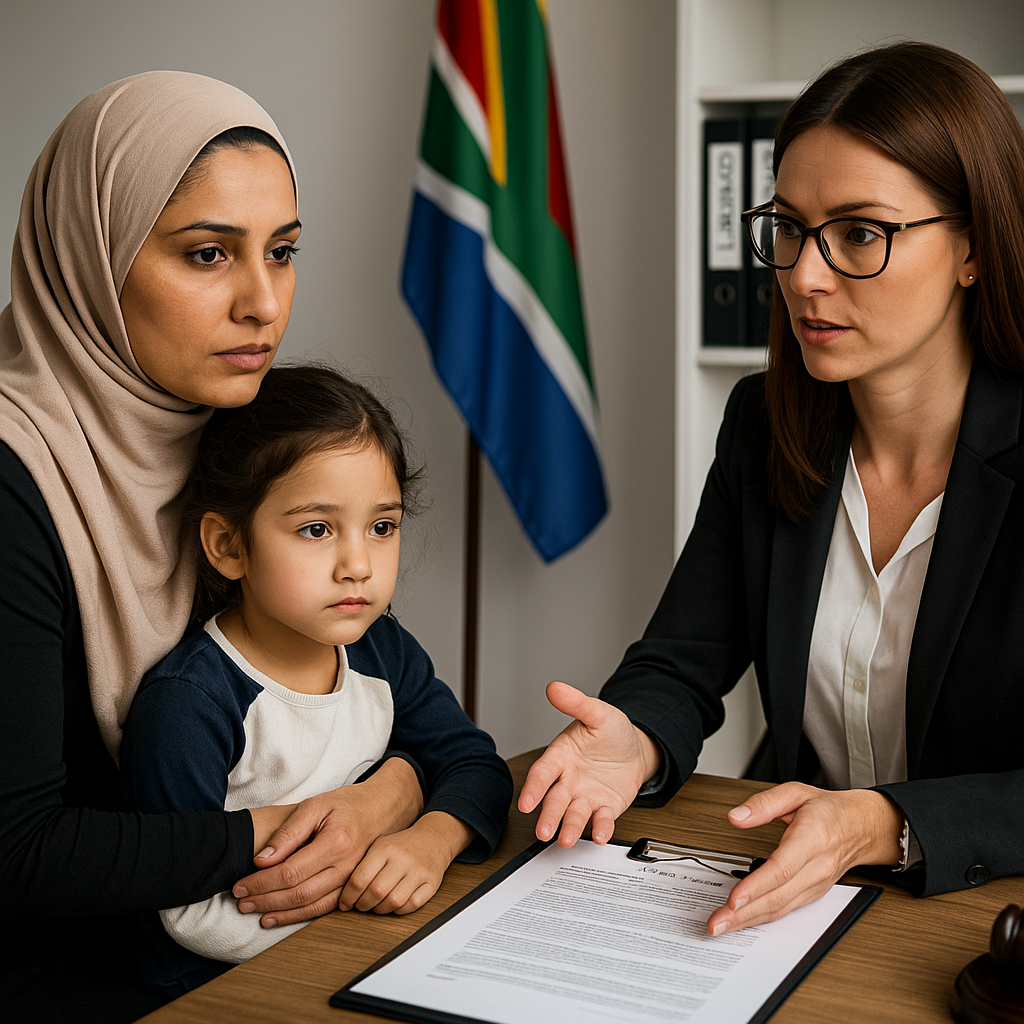
Divorce Amendment Act 2024: How the Law Recognising Muslim Marriages Affects You
After years of advocacy and legal battles, the Divorce Amendment Act 2024 has brought long-overdue recognition to Muslim marriages in South Africa. For decades, couples married under Islamic rites were left in a legal grey zone. Now, with the passing of this Act, Muslim spouses—especially women and children—have access to vital legal protections during divorce.
In this article, we explain what this law means for your marriage, your rights, and how to navigate the new legal landscape.
What Changed Under the Divorce Amendment Act 2024?
The Amendment officially brings Muslim marriages under the scope of the Divorce Act 70 of 1979. This means that a marriage concluded by Nikah (Islamic marriage ceremony) is now recognised as a valid marriage for divorce purposes. Key protections and mechanisms are now available to Muslim couples, including:
1. Recognition of Nikah as a Legal Marriage under the Divorce Amendment Act 2024
The Divorce Amendment Act 2024 introduces a critical provision by formally recognising Nikah marriages (marriages concluded in accordance with the tenets of Islam). Previously, if a Muslim couple had not undergone a civil marriage through Home Affairs, their union was not recognised under South African civil law. This meant that in the event of a breakdown, neither spouse could access the legal protections available to those in civil marriages.
Under the Divorce Amendment Act 2024, this has changed. A “Muslim marriage” is now defined in the Divorce Act as a marriage validly concluded in terms of Islamic law. Even if the couple never registered the marriage with Home Affairs, they can now approach a court for relief. This recognition removes the previous legal vacuum and grants Muslim couples full access to family law remedies in a divorce.
2. Access to Civil Divorce Courts for Muslim Couples
Previously, Muslim spouses had limited recourse to South African courts when their marriage broke down. Islamic divorce mechanisms such as Talaq (repudiation by the husband) or Faskh (annulment by a religious body) were recognised under Sharia Law but not enforceable under South African civil law.
Thanks to the Divorce Amendment Act 2024, Muslim spouses can now approach a civil court—either a Regional Divorce Court or a High Court—for a divorce decree. This means that either spouse can initiate divorce proceedings based on irretrievable breakdown of the marriage (Section 4 – Divorce Act), or mental illness or unconsciousness (Section 5 – Divorce Act), just as in any other civil marriage. The courts now have clear jurisdiction to grant legal divorces for Muslim marriages, ensuring that religious dissolutions are no longer the only option.
3. Divorce Amendment Act 2024 Ensures Protection of Children in Divorce
One of the most crucial reforms in the Divorce Amendment Act 2024 is its strong protection of the rights of children born of Muslim marriages in divorce matters. The Divorce Act clothes the Court with the obligation to ensure that satisfactory arrangements have been made regarding the interests of dependent and minor children before granting a decree of divorce. This protection now extends to children born of Muslim marriages.
This protection includes determining parental responsibilities and rights, including care, contact (access), guardianship, and maintenance in accordance with the best interests of the child standard, as set out in the Children’s Act and the Constitution. The law ensures that children born of a Muslim marriage are afforded the same legal status and protection as any child of a civil marriage.
4. Equitable Redistribution of Property Under Divorce Amendment Act 2024
The Divorce Amendment Act 2024 introduces a critical provision regarding asset division—section 7(3A)—which allows the court to redistribute assets equitably between the spouses of a Muslim marriage.
Traditionally, the spouse (often the wife) who was not the legal owner of property had no claim—even if she had contributed significantly to the household or the growth of a business. Now, under section 7(3A), a spouse can apply to the court for a redistribution of property based on what is just and equitable. The court will assess direct and indirect contributions to the estate and may award a portion of the assets to the non-owner spouse. This ensures fairness and prevents unjust enrichment.
5. Spousal Maintenance Rights Expanded by the Divorce Amendment Act 2024
Historically, Muslim spouses—especially women—had very limited legal grounds to claim post-divorce maintenance. The religious obligation of iddah (a short post-divorce waiting period) provided only minimal support, often insufficient for long-term stability.
With the Divorce Amendment Act 2024, Muslim spouses now have the right to claim maintenance under section 7(2) of the Divorce Act. The court will consider factors such as the duration of the marriage, each party’s financial means, age, employability, and standard of living during the marriage. This is a significant improvement in ensuring financial security for the spouse who may have sacrificed employment or educational opportunities for the sake of the marriage and family.
6. Divorce Amendment Act 2024 and Polygamous Muslim Marriages
In many Muslim communities, polygynous marriages—where one husband has multiple wives—are a recognised part of family life. Prior to the Divorce Amendment Act 2024, such marriages existed outside the formal legal framework, leading to confusion and unfairness during divorce or death.
The new Act accommodates polygamous marriages by allowing courts to consider any agreements made between the husband and his wives regarding property. When a divorce occurs, the court can join all affected parties and make equitable orders that ensure no wife is unfairly disadvantaged. This includes dividing assets fairly and upholding agreements or customary understandings. The aim is to provide a consistent, just outcome in all marital contexts, including polygamous unions.
7. Forfeiture of Patrimonial Benefits in Muslim Divorces under the Divorce Amendment Act 2024
Another notable feature of the Divorce Amendment Act 2024 is the amendment of section 9(1) of the Divorce Act, which now also applies to Muslim marriages. This section allows for the forfeiture of patrimonial benefits if one spouse would unduly benefit from the marriage, having regard to the duration of the marriage, the circumstances which gave rise to the breakdown thereof, or any substantial misconduct on the part of either party.
For example, if a spouse was abusive or contributed very little to the marriage but seeks to claim half of the other’s estate, the court can intervene. It may order that the offending spouse forfeit those benefits, thus ensuring that the division of property does not result in injustice. This is an important protective mechanism for spouses who acted in good faith and contributed meaningfully to the marriage.
Filing for Divorce as a Muslim Couple
Thanks to the Divorce Amendment Act 2024, Muslim couples in South Africa now have a clear and legally recognised pathway to dissolve their marriages through the civil court system. This process ensures that both parties, especially women and children, receive the full protection and remedies offered under South African family law.
Here are the essential steps involved:
1. File for Divorce in a Civil Court
Under the new law, either spouse in a Muslim marriage may approach a civil court—typically a Regional Court or a High Court with divorce jurisdiction—to initiate divorce proceedings. This step marks a departure from the past, where only religious mechanisms such as Talaq (unilateral repudiation by the husband) or Faskh (annulment granted by an Islamic council) were used. Now, the state formally recognises these marriages and empowers both spouses with equal legal standing to initiate a divorce.
2. Submit Proof of the Islamic Marriage
Since many Muslim marriages were not registered through Home Affairs, the court will require alternative proof of the marriage. This can include a Nikah certificate issued by a mosque, an affidavit by the Imam who conducted the marriage, or even witness statements. The goal is to confirm that a valid Muslim marriage existed under Sharia law, which now qualifies as a recognised marriage for the purposes of the Divorce Amendment Act 2024.
3. Request Appropriate Relief
When filing for divorce, spouses can request various forms of relief from the court. This may include spousal maintenance, division of property, custody and guardianship of children, and child maintenance. The relief sought must be just and equitable, and the court will evaluate the circumstances of each case individually. This ensures that no party—especially vulnerable spouses or children—is left at a disadvantage.
4. Obtain a Court Decree
The court will assess whether the marriage has irretrievably broken down, or if other grounds such as mental illness apply. If satisfied, it will issue a decree of divorce. This decree is essential: it not only dissolves the marriage legally but also activates any court orders regarding support, custody, or asset division.
Already Divorced Islamically? Here’s What to Know
If you obtained a Talaq or Faskh in the past and did not pursue a civil divorce—perhaps because your marriage wasn’t recognised under civil law at the time—you may now be eligible to formalise your divorce under the Divorce Amendment Act 2024.
This is particularly relevant if your marriage was still subsisting as of 15 December 2014 or if proceedings were ongoing at the time the new law took effect.
Why Get a Civil Divorce Too?
Formalising your Islamic divorce through a civil court offers several important advantages:
• Legal Finality and Clarity of Status: You and your former spouse will be clearly recognised as divorced in the eyes of the law, avoiding legal confusion in future.
• Enforceable Support and Asset Division: Any arrangements for maintenance, custody, or property are legally binding and enforceable.
• Avoids Complications When Remarrying: Should you wish to remarry, a civil divorce ensures there are no legal barriers or ambiguities.
Protections for Women and Children
The Divorce Amendment Act 2024 ensures that women and children in Muslim marriages now enjoy the same legal safeguards as those in civil unions:
• Financial Security for Spouses: Courts can order equitable redistribution of assets and spousal maintenance.
• Equal Legal Recognition of Children: Children from Muslim marriages are treated equally under the law, particularly in matters of custody and support.
• Equity in Polygamous Marriages: Where multiple spouses are involved, the court will ensure all parties are treated fairly and existing agreements are honoured.
What If Your Marriage Was Never Registered?
Your Nikah is sufficient proof for divorce proceedings. Registration is optional.
Case Study: H.A v N.A (144907/2024) [2025] ZAGPPHC 121 (13 February 2025)
In H.A. v N.A., the Pretoria High Court addressed whether it had jurisdiction to grant interim relief under Rule 43 in a Muslim marriage where the husband had issued a Talaaq before divorce proceedings were initiated. The respondent argued that the marriage had already been dissolved under Islamic law, rendering the applicant no longer a “spouse” under Rule 43.
The applicant, however, asserted that the marriage remained valid under the Divorce Amendment Act 2024, which recognises Muslim marriages and allows civil courts to dissolve them. She highlighted that the respondent had not yet formally disputed the marriage in pleadings and that the Act permits applications even where a Talaaq has occurred but civil proceedings are pending.
Judge Van der Schyff dismissed the point in limine, finding that the term “spouse” includes someone claiming to be a spouse, even if the status is denied. The court confirmed that only the court hearing the full divorce action could determine the validity or subsistence of the marriage.
This decision underscores that under the Divorce Amendment Act 2024, Talaaq does not strip civil courts of jurisdiction, and interim relief remains accessible pending final divorce determination. The court ruled that costs would be costs in the cause.
FAQs – Understanding the Divorce Amendment Act 2024
Q1: Is my unregistered Nikah valid for divorce?
A: Yes. Under the Divorce Amendment Act 2024, a marriage concluded in accordance with Islamic tenets is recognised for divorce proceedings—even if it was not registered with Home Affairs. You can approach a civil court for a legal divorce.
Q2: Can I initiate the divorce?
A: Absolutely. Either spouse can file for divorce. You no longer need to rely solely on the husband’s unilateral Talaq. The civil courts now provide equal access to both spouses.
Q3: Do I need another marriage certificate?
A: No. Unless you wish to register the marriage with Home Affairs for administrative convenience (like banking or insurance), no additional certificate is required for the divorce process.
Q4: We had a Talaq. Do we need civil divorce?
A: Yes. A Talaq on its own does not legally end the marriage under South African law. A civil court must still issue a decree of divorce to ensure access to legal remedies like maintenance and asset division.
Q5: How are polygamous divorces handled?
A: Courts consider all affected spouses. Any agreements between parties are taken into account to ensure equitable outcomes for all wives involved.
Q6: Can I claim my husband’s property?
A: Yes, if you contributed to the marriage—whether directly (e.g. financially) or indirectly (e.g. as a homemaker). Courts can order redistribution under section 7(3A).
Q7: What about custody and support?
A: The Children’s Act applies. Courts will prioritise the child’s best interests when deciding on residence, contact, and financial support.
Q8: Is spousal maintenance automatic?
A: No. You must apply for it and demonstrate need. Courts assess factors like earning capacity, age, and standard of living.
Q9: What if my husband won’t come to court?
A: The court can still proceed and issue orders based on available evidence to protect your rights.
Need Help With a Muslim Divorce?
At Vermeulen Attorneys, we’re fully versed in the Divorce Amendment Act 2024 and ready to help. Contact us today for expert legal guidance.
References: