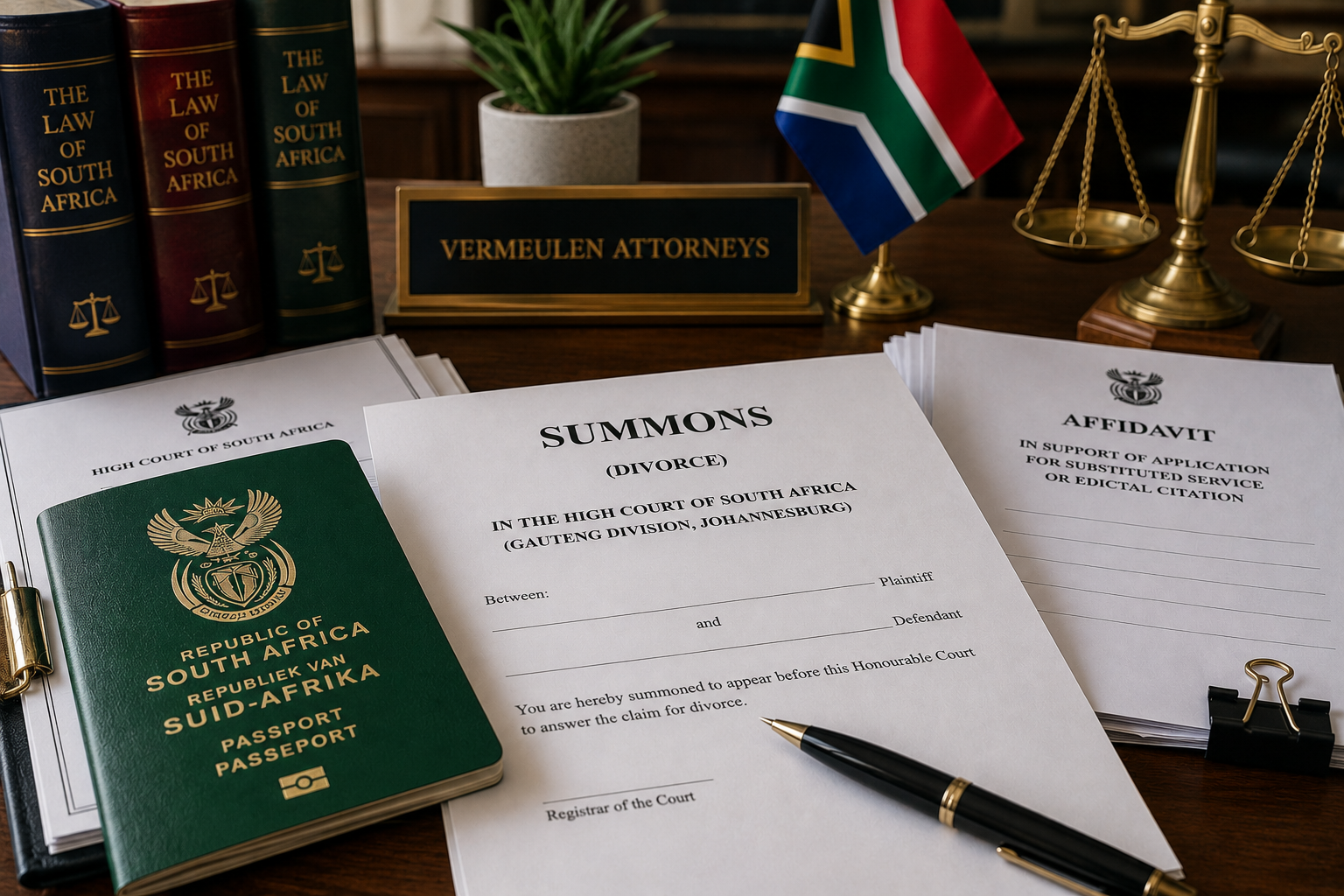
Navigating International Divorce Jurisdictional Challenges and Solutions : In an increasingly globalised world, divorce is no longer confined to the borders of a single country. With an ever-growing number of international marriages, the issue of jurisdiction—determining which country's courts have the authority to handle the divorce—has become a crucial aspect of family law. This is especially relevant in South Africa, where legal complexities surrounding cross-border divorces can create significant challenges for spouses seeking to dissolve their marriages.
Divorce laws in South Africa
Divorce laws in South Africa are governed by the Divorce Act 70 of 1979, which provides a clear framework for ending a marriage. Under this Act, a court may grant a divorce if it is satisfied that there has been an irretrievable breakdown of the marriage. However, one of the critical aspects to understand before initiating a divorce is jurisdiction—specifically, the concept of domicile and ordinary residence in South Africa. Let’s dive into these concepts and how they affect divorce proceedings in South Africa.
What is Domicile in South African Law?
In South African law, domicile refers to the place where a person has their permanent home or intends to return after a period of absence. This is a crucial factor in determining which country's courts have jurisdiction over a divorce. Essentially, your domicile is the place that you consider your permanent home, regardless of where you currently live or work.
There are different types of domicile under South African law:
- Domicile of Origin: This is the domicile a person acquires at birth. Typically, this is the place where the father is domiciled (or the mother if the father is deceased, or if the child is born out of wedlock). For example, if both parties in a divorce case were born in South Africa, they would be considered domiciled here unless they’ve actively changed their domicile.
- Domicile of Choice: This applies to individuals who are over the age of 18 and have the legal capacity to change their domicile. If a person moves to a new country with the intention of making it their permanent home, this is considered a domicile of choice. However, it's important to note that if someone works abroad but intends to return to South Africa, their domicile would likely remain in South Africa, provided that their intention to return is clear and genuine.
A person cannot have more than one domicile.
Jurisdiction for Divorce: Domicile and Ordinary Residence
In divorce cases, jurisdiction refers to the power of the court to hear the case and make a decision. Under South African law, the court has jurisdiction if, at the time of commencing the divorce action, at least one of the spouses is either:
- Domiciled in South Africa; or
- Ordinarily resident in South Africa and has been residing here for at least one year immediately prior to proceeding with the divorce action.
This means that if a South African citizen or resident, even if they have been living abroad for a time, can prove they are domiciled in South Africa (or meet the criteria for ordinary residence), the South African courts can hear their divorce case.
If a person was born in South Africa and considers it their permanent home, and have not obtained a new domicile in another country, they are considered to have a domicile of origin in South Africa. This allows them to file for divorce in South Africa, even if they have lived in another country for a time. This is particularly important in cases where one party works overseas but intends to return to South Africa at a specified date, usually when their work commitments expire, as their domicile would still be considered South African as long as they intend to return.
Additionally, ordinary residence is relevant in cases where a person has lived in South Africa for a continuous period of at least one year. If they have been living here for this duration, they can also file for divorce, even if they are not formally domiciled in the country. Individuals who reside in South Africa but were married in another country under that country’s law, can get divorced in South Africa.
Divorce Jurisdiction and Cross-Border Considerations
In cases where one or both spouses are living outside South Africa, the divorce proceedings may involve additional steps, such as:
- Edictal Citation and Substituted Service: If one party is outside South Africa, the plaintiff may need to apply for edictal citation and substituted service to serve divorce papers to the defendant. An edictal citation is a court order that allows for the serving of divorce summonses outside of South Africa and substituted service is using mechanisms like email or social media to serve divorce papers. It is required when one party resides abroad and the other wishes to initiate divorce proceedings in South Africa. This process ensures that the defendant is properly notified, even if they are not physically present in South Africa.
- International Jurisdiction: If there are assets located in another country (e.g., Australia), it may be necessary to initiate a mirror order application in that country to ensure that the South African divorce order is enforced. A mirror order is a court order issued in one jurisdiction that reflects the terms of an order made in another jurisdiction. This ensures that the terms of the original order are recognised and enforceable in the foreign jurisdiction.
- In some cases, it’s possible to apply for a Hague Convention procedure if children are involved and if there are concerns about one parent attempting to remove the children from South Africa. The Hague Convention provides a legal framework to ensure the prompt return of children wrongfully removed or retained across international borders. It aims to protect the best interests of the child in international custody disputes.
Conclusion
Understanding the jurisdictional requirements of divorce law in South Africa can sometimes be complicated, especially in cases involving cross-border issues. However, if you meet the criteria of being domiciled or ordinarily resident in South Africa, you should have no trouble initiating divorce proceedings in the country. If you are unsure about your specific situation, consulting Vermeulen Attorneys can help clarify any uncertainties and guide you through the process.
FAQ
1. Can I get divorced in South Africa if I live abroad?
Yes, South Africa allows individuals residing abroad to file for divorce if either one or both spouses are domiciled or ordinarily resident within South Africa, regardless of whether the marriage is in terms of South African laws or not.
2. Which country has jurisdiction over my divorce?
Jurisdiction refers to the legal authority to hear a divorce case. The country where the divorce can be filed depends on various factors, such as:
- The country of residence of either party.
- The country where the marriage was registered.
- The nationality of either spouse.
- The location of any children involved.
South Africa generally has jurisdiction if either party is domiciled in South Africa or has been a resident for at least one year before filing.
3. Can I file for divorce in South Africa if my spouse lives in another country?
Yes, you can file for divorce in South Africa if you meet certain requirements. For example, if you are domiciled in South Africa or have lived in the country for a specific period, you can apply for a divorce in a South African court.
4. How is child custody handled in an international divorce?
Child custody in international divorces is complex, especially if the children live in different countries or have citizenship in different countries. South African courts follow the Hague Convention on the Civil Aspects of International Child Abduction, which aims to ensure that decisions about children are made in their best interests and that they are not wrongfully removed from a country.
5. How is property divided in an international divorce?
Property division can be complicated in international divorces, particularly when assets are located in different countries. South African law requires the division of marital property according to the marital regime (e.g., in community of property, out of community of property). However, international property laws and foreign jurisdictions may influence how and where the assets are divided.
6. Can South African courts enforce a divorce order made in another country?
South African courts may recognise and enforce divorce orders made in another country, provided the foreign court had jurisdiction and the order complies with South African public policy. However, enforcement of foreign orders related to property, maintenance, or custody may be more complex and may require additional steps, including registration in a South African court.
7. What if my spouse refuses to divorce me or contest the proceedings?
If your spouse refuses to cooperate or contest the divorce, South African courts may still proceed with a default divorce. However, the process may take longer, especially if the spouse resides in another country, and international service of divorce papers may be required.
8. How do maintenance and spousal support work in an international divorce?
Maintenance or spousal support in an international divorce may be challenging to enforce, particularly if the paying spouse lives in another country. South Africa has agreements with some countries under the Hague Maintenance Protocol, which simplifies the process of obtaining and enforcing maintenance orders internationally.
9. What should I consider when divorcing a spouse from a different country?
Some important factors to consider include:
- Jurisdiction: Which country’s laws will apply to your case.
- Child Custody: Which country’s laws will govern custody and access.
- Property and Assets: Whether assets are in South Africa or abroad and how they will be divided.
- Language and legal procedures: Legal processes in both countries and whether translation services are needed.
10. Will my divorce in South Africa be recognised overseas?
A South African divorce will generally be recognised in other countries, as long as it meets the specific requirements of that country’s law.